A common myth is that breast implants expire after ten years and must be swapped on a schedule. The truth is more nuanced, and breast implant replacement is something you may never need — or something that becomes necessary years down the line.
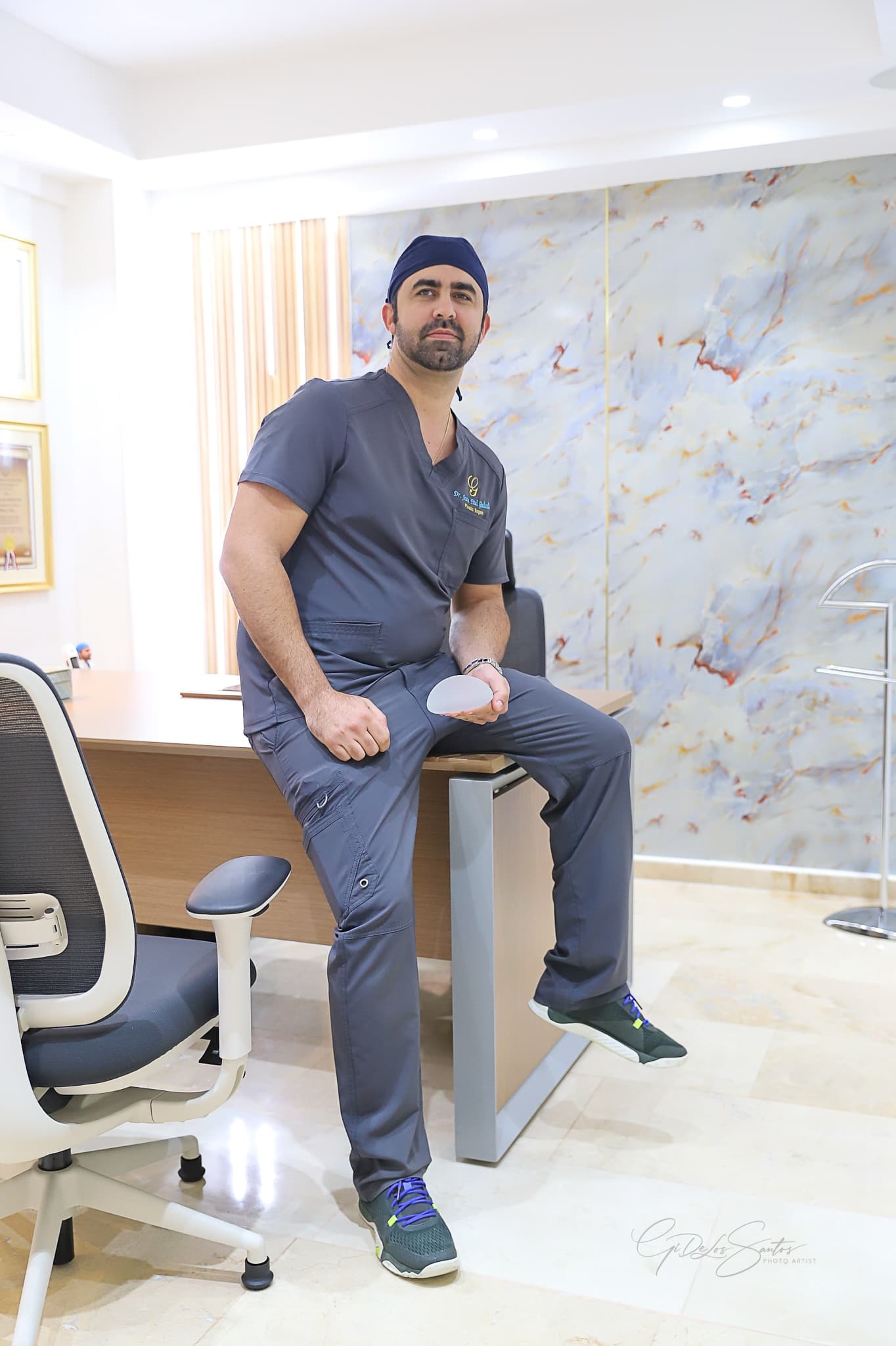
Dr. Jean Paul Giudicelli Saba, board certified plastic surgeon in Santo Domingo, explains how long implants last, when replacement is actually required, and what warning signs mean it is time.
Do breast implants need to be replaced on a schedule?
No. Breast implants do not come with a fixed expiration date, and the idea that they must be replaced every ten years is a misconception. Modern implants used in breast augmentation are built to last for many years, and replacement is based on what happens to the implant and your body over time — not on a calendar.
Some patients keep the same implants for well over a decade with no problems. Others need a revision sooner because of a complication or a change in what they want. Breast implants are medical devices, not lifetime guarantees, so the honest answer is that they may need replacing eventually — but not on a set schedule.
How long do breast implants typically last?
Most breast implants last many years, and a large number of patients go well beyond a decade without needing replacement. There is no single number that applies to everyone, because implant lifespan depends on the type of implant, your anatomy, and how your body responds over time.
Think of implants the way you would any medical device: durable and well made, but not immune to wear. The longer an implant is in place, the higher the lifetime chance that a revision will eventually be needed — but "eventually" is often far in the future, not at year ten.
What are the reasons implants actually get replaced?
Breast implants get replaced for specific reasons, not simply because time has passed. The most common causes fall into a few categories.
- Rupture or leak: The implant shell develops a tear, and the saline or silicone is released or stays contained within the scar capsule
- Capsular contracture: The scar tissue that naturally forms around the implant tightens and hardens, distorting shape and causing discomfort
- Changes in your goals: You want a different size, a different shape, or you no longer want implants at all
- Cosmetic changes over time: Pregnancy, weight changes, or the natural effects of aging shift how the breast sits around the implant
- Rippling or malposition: The implant becomes visible, palpable, or settles into a position you are unhappy with
During a consultation, Dr. Giudicelli evaluates which of these apply to you, since the reason for replacement shapes the surgical plan.
How do you know if a breast implant has ruptured?
A ruptured breast implant can be obvious or completely silent, depending on the type of implant. Recognizing the difference helps you know when to seek evaluation.
Saline implants deflate noticeably when they rupture — the breast loses volume over days as the body safely absorbs the salt water. Silicone implants often rupture silently, with no visible change, because the gel stays trapped within the surrounding scar capsule. This is why imaging is sometimes recommended to monitor silicone implants over the long term, as your surgeon advises.
Signs worth reporting include a change in breast size or shape, new firmness, pain, swelling, or a palpable lump. If you notice any of these, contact your surgical team for evaluation rather than waiting.
What is capsular contracture?
Capsular contracture is the most common reason implants are replaced, and it happens when the scar capsule your body forms around the implant tightens abnormally. Every patient forms a capsule — that is normal and expected — but in some cases the capsule contracts and squeezes the implant.
When this happens, the breast can feel firm, look rounder or higher than the other side, and become uncomfortable or painful. Mild cases may need no action. More advanced cases are treated surgically, often by removing the capsule and replacing the implant. Capsular contracture is uncommon, but it is a real reason replacement sometimes becomes necessary.
Does replacement mean the same surgery again?
Breast implant replacement is a revision procedure, and it is not always identical to your first surgery. In many cases the existing incision can be reused, which means no new scar. The complexity depends on why you are having the exchange.
A straightforward size change is relatively simple. Replacing an implant along with removing a tightened capsule, or combining the exchange with a lift to address tissue that has stretched over the years, is a larger operation. Dr. Giudicelli evaluates your tissue, your current implants, and your goals to plan the procedure that fits your situation.
Can you remove implants without replacing them?
Yes. Not every patient who removes implants wants new ones. Some choose explant surgery — removal of the implants — without replacement, either because their preferences have changed or because they no longer want to maintain implants over time.
How the breast looks afterward depends on your original tissue, the size of the implants removed, and how your skin has adapted. Some patients are satisfied with removal alone, while others add a breast lift to reshape the remaining tissue. This is an individual decision, and there is no single right answer.
What is the recovery like after implant replacement?
Recovery after breast implant replacement is often more comfortable than the first augmentation, especially for a simple size exchange, because the tissue pocket already exists. Recovery is more involved when a capsule is removed or a lift is added.
You wear a compression garment or surgical bra for 3 months to support healing and help the implant settle. Final results become visible at 8–12 months as swelling resolves and the breast softens into its natural shape. As with any surgery, follow your surgeon's instructions and report unusual pain, swelling, redness, or fever.
How does implant type affect replacement?
The type of implant you choose influences how it ages and how a future replacement is handled. Understanding this before your first surgery helps you plan ahead. If you are still deciding, our guides on silicone versus saline implants and how to choose your implant size walk through the trade-offs in detail.
Saline implants reveal a rupture clearly through visible deflation, while silicone implants may need periodic imaging to detect a silent rupture. Size matters too: very large implants place more long-term stress on the tissue, which can influence how the breast changes over the years. These factors are worth discussing before your first surgery, not only at replacement.
Frequently Asked Questions
Do breast implants have to be replaced every 10 years?
No. Breast implants do not need to be replaced every 10 years. That is a myth. Replacement is based on complications like rupture or capsular contracture, or on a change in your goals — not on a fixed timeline. Many patients keep their implants well beyond a decade.
How will I know when my implants need replacing?
You may notice a change in breast size, shape, firmness, or new pain or swelling. Saline ruptures cause visible deflation; silicone ruptures are often silent and may need imaging to detect. If you notice any change, contact your surgical team for evaluation.
Can I change my implant size when I replace them?
Yes. Replacement is a common time to go larger or smaller. The existing incision can often be reused, avoiding a new scar. Your surgeon evaluates your tissue to determine which sizes are safe and appropriate for your anatomy.
Is implant replacement surgery harder than the first surgery?
It depends. A simple size exchange is often easier than the original surgery because the tissue pocket already exists. Replacement combined with capsule removal or a breast lift is a larger procedure with a longer recovery.
Can I just remove my implants and not replace them?
Yes. Explant surgery removes the implants without replacement. How the breast looks afterward depends on your tissue and the implant size removed. Some patients add a lift to reshape the remaining breast tissue.
Planning your procedure
Whether you are considering your first augmentation or a replacement years later, an individual evaluation tells you what your tissue allows and what to expect. Dr. Giudicelli reviews your implants, your goals, and your anatomy to plan the right approach.
Schedule your free virtual consultation today. Contact us via WhatsApp or visit drgiudicelli.com.