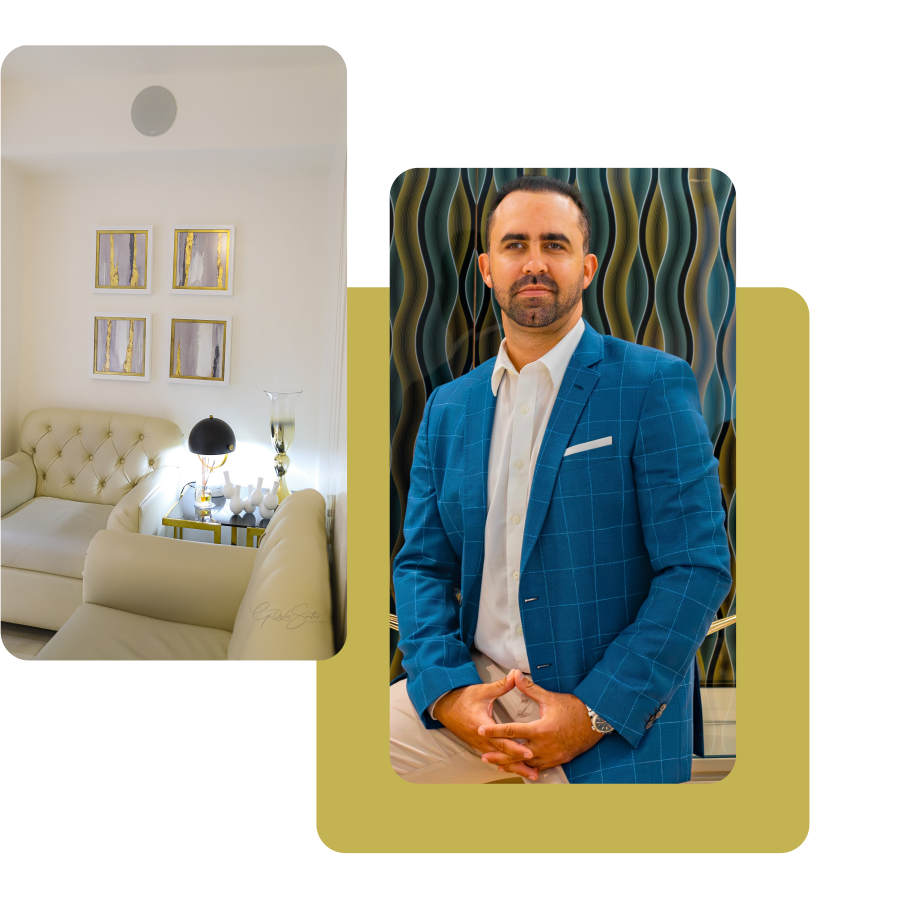
Patients spend months researching surgeons, comparing techniques, and planning their procedure — and then treat recovery as an afterthought. This is backwards. A technically excellent surgery can be undermined in the weeks that follow, and Dr. Jean Paul Giudicelli Saba, board-certified plastic surgeon in Santo Domingo, sees the same avoidable mistakes repeatedly.
Here are the ones that most often compromise a result.
1. Abandoning the Compression Garment Early
This is the most common mistake, and one of the most damaging.
The compression garment is not a comfort item. It reduces swelling, supports the skin as it retracts over your new contour, and helps prevent fluid accumulation. Patients who stop wearing it at three weeks because it is hot or uncomfortable frequently end up with more swelling, less skin retraction, and a less defined result.
Wear it as instructed — typically for three months, full time in the early weeks. The discomfort is temporary. The effect on your result is permanent.
2. Skipping Lymphatic Massage
Many patients treat lymphatic drainage as optional or as a luxury expense to cut. It is neither.
After surgery, the lymphatic system is temporarily disrupted and fluid accumulates in the tissues. Left unaddressed, this contributes to prolonged swelling and to fibrosis — hard, lumpy scar tissue that can permanently affect the smoothness of your contour, particularly after liposuction.
Sessions should begin 48 to 72 hours after surgery and continue for several weeks. Budget for it before you book your procedure, not after.
3. Returning to the Gym Too Soon
Common among patients who were active before surgery and feel reasonably good by week three.
Feeling good is not the same as being healed. Resistance training, lifting, and high-intensity exercise before clearance can cause bleeding, fluid accumulation, wound separation, and — after a tummy tuck — compromise the muscle repair itself.
Light walking from day one is encouraged and beneficial. Everything else waits for clearance, typically four to six weeks.
4. Sitting Directly on the Buttocks After a BBL
The transferred fat needs time to establish a blood supply. Direct pressure during the first two to three weeks increases how much of it the body reabsorbs — meaning less volume, less projection, and a result that falls short of what was achieved in surgery.
Use your BBL pillow. Sleep on your stomach or sides. Take the restriction seriously — this is one of the few recovery rules where the consequence is immediate and irreversible.
5. Judging Your Result Too Early
At week two you are swollen, bruised, and often asymmetric. At week six you look considerably better but are still not seeing your outcome. Final results appear at eight to twelve months, depending on the procedure.
Patients who panic at week three — convinced the result is wrong, that one side is uneven, that nothing changed — are almost always looking at swelling rather than a final outcome. Take progress photos, be patient, and raise concerns with your surgeon rather than with the internet.
6. Neglecting Scar Care
Scars go through a maturation process lasting twelve to eighteen months. What you do during that window meaningfully affects the final appearance.
The two most impactful habits: consistent use of silicone gel or sheets once the incision has fully closed, and rigorous sun protection. UV exposure on a healing scar can cause permanent darkening that no treatment fully reverses.
7. Significant Weight Fluctuation After Surgery
Liposuction permanently removes fat cells, but the cells that remain can still expand. Fat transferred during a BBL behaves like fat anywhere else in your body — it grows with weight gain and shrinks with weight loss.
Substantial weight changes after body contouring will alter your result. The goal after surgery is stability, not further transformation.
8. Poor Nutrition and Dehydration
Healing is metabolically demanding. Your body needs protein to repair tissue, vitamins to support collagen formation, and adequate hydration to manage fluid balance.
Patients who eat poorly during recovery heal more slowly and swell longer. This is particularly relevant for patients who have used GLP-1 medications, where reduced appetite can lead to insufficient protein intake at exactly the wrong moment.
9. Smoking or Vaping During Recovery
Nicotine constricts blood vessels and reduces oxygen delivery to healing tissue. The consequences include delayed healing, wound separation, tissue necrosis, and visibly worse scarring.
This applies to cigarettes, vaping, nicotine pouches, and patches. Patients who stop before surgery and resume at week two undo much of the benefit.
10. Flying Home Before Being Cleared
Booking a fixed return flight and refusing to change it is a serious risk. Prolonged sitting on a plane increases clot risk, and being far from your surgeon before you are stable removes your safety net at the moment you most need it.
Book flexible return tickets and let your surgeon confirm when you are ready to travel.
11. Going Silent With Your Surgeon
Patients sometimes hesitate to report a concern — worried they are overreacting, or embarrassed that they broke a restriction.
Your surgeon needs accurate information to help you. Increasing pain, redness, fever, unusual drainage, or a sudden change in one area should be reported immediately. Early intervention resolves most problems easily; delayed intervention does not.
Dr. Giudicelli provides remote follow-up via WhatsApp precisely so international patients retain direct access throughout recovery. Use it.
12. Comparing Your Recovery to Strangers Online
Patient forums and social media are useful for practical tips and emotional support. They are unreliable for medical guidance.
Every patient has different anatomy, a different procedure, and a different healing pattern. Someone who looks dramatically better at week two may have had a far less extensive surgery. Follow your surgeon's instructions, not a stranger's timeline.
The Short Version
- Wear the compression garment for the full duration
- Get your lymphatic massage sessions
- Walk early, but wait for clearance before real exercise
- Respect BBL positioning restrictions
- Do not judge your result before eight to twelve months
- Protect your scars from the sun and use silicone
- Maintain a stable weight
- Eat well and stay hydrated
- No nicotine in any form
- Book flexible flights and wait for clearance
- Contact your surgeon with any concern, immediately
Why Choose Dr. Jean Paul Giudicelli Saba?
- Board-certified plastic surgeon — Member of ASPS, SODOCIPRE & FILACP
- Residency at Hospital Salvador B. Gautier — RENACIP program
- All procedures performed in fully accredited surgical facilities
- 4.8-star Google rating with 66+ verified patient reviews
- Structured follow-up during your stay in Santo Domingo
- Remote post-operative support via WhatsApp after you return home
- Free virtual consultation for international patients
Frequently Asked Questions
What is the single most important thing I can do for my result?
Follow your surgeon's post-operative instructions precisely. Surgical technique determines what is possible; your recovery determines how much of that potential you actually keep.
What if I already made one of these mistakes?
Contact your surgeon rather than waiting to see what happens. Many issues caught early can be corrected or mitigated. Fibrosis, for example, responds far better to treatment in the first weeks than months later.
How do I know if something is a complication or normal healing?
Swelling, bruising, firmness, mild asymmetry, and discomfort are normal. Fever, increasing rather than decreasing pain, spreading redness, unusual drainage, or a sudden change in one area are not. When in doubt, message your surgeon — that is what the follow-up channel is for.
Can a poor recovery permanently ruin a good surgery?
It can meaningfully compromise it. Fibrosis, poor skin retraction, widened scars, and reabsorbed fat after a BBL are all outcomes influenced by recovery behavior — and not all of them are fully correctable later.
Planning Your Procedure?
Dr. Jean Paul Giudicelli Saba guides every international patient through the full process — surgery and recovery — so nothing is left to guesswork.
Schedule your free virtual consultation today. Contact us via WhatsApp or visit drgiudicelli.com.