Plastic surgery is no longer a conversation limited to women. Male patients now represent one of the fastest-growing segments in body contouring worldwide — and many are traveling internationally for procedures they have quietly considered for years.
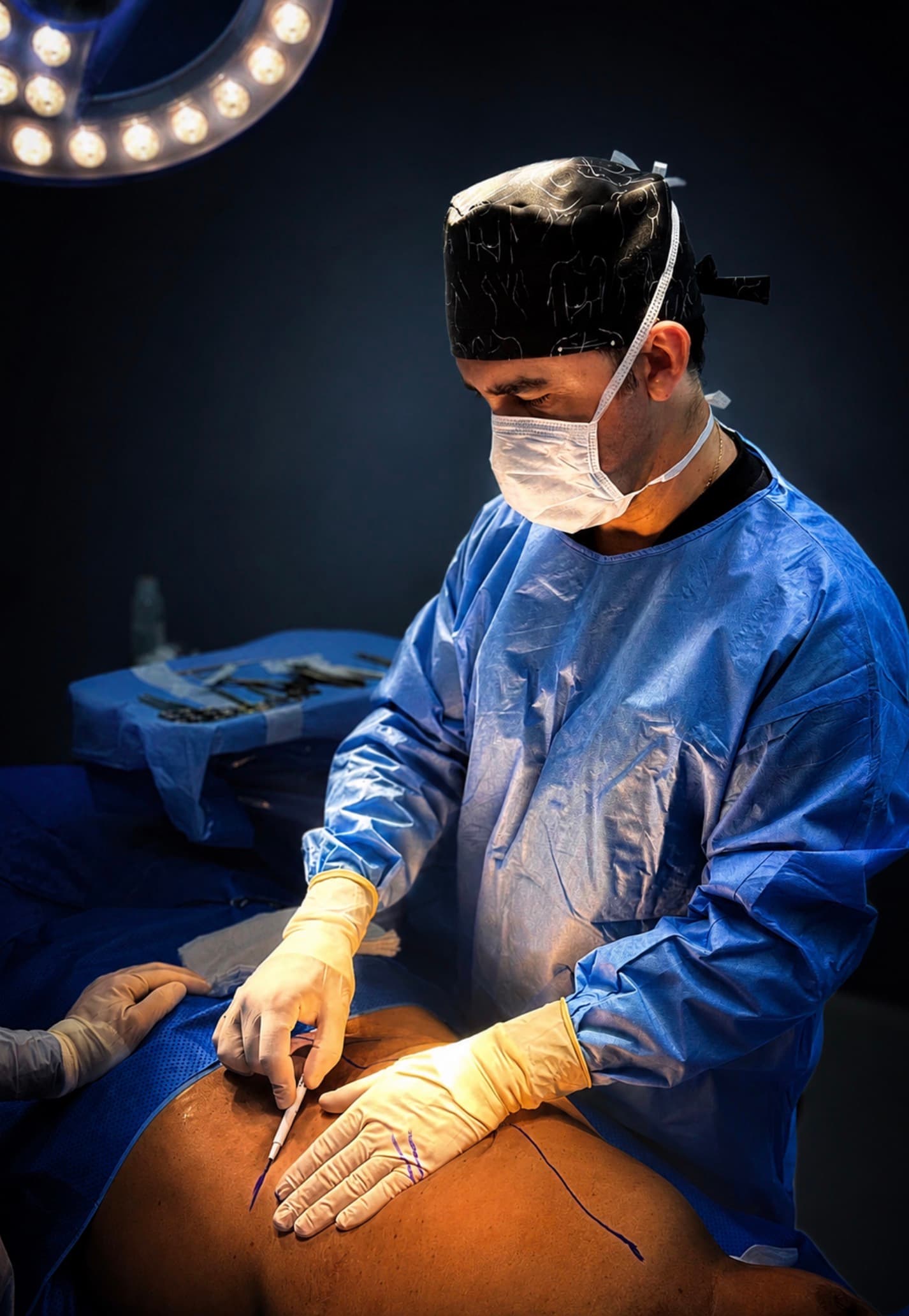
Dr. Jean Paul Giudicelli Saba, board-certified plastic surgeon in Santo Domingo, Dominican Republic, explains the procedures most requested by male patients and what makes male body contouring technically different.
Why Male Body Contouring Is Different
Male and female aesthetics are not the same, and treating them identically produces results that look wrong. The male ideal is defined by:
- A V-shaped torso: Broader shoulders and chest tapering to a narrower waist
- Muscular definition: Visible structure of the abdominal wall, obliques, and chest
- A flat, firm chest: No projection or fullness in the breast area
- Angular rather than curved lines: Definition and edges rather than smooth transitions
- Minimal hip and buttock volume: The opposite goal of most female contouring
A surgeon who applies female contouring principles to a male patient will produce a result that feels subtly but unmistakably off. Male body contouring requires deliberate technique — different fat removal patterns, different areas of emphasis, and a different aesthetic target.
Gynecomastia Surgery — The Most Requested Male Procedure
What Is Gynecomastia?
Gynecomastia is the enlargement of male breast tissue. It affects a significant portion of men at some point in life and can result from hormonal changes during puberty, weight fluctuations, certain medications, anabolic steroid use, or aging.
It is important to distinguish between two presentations:
- True gynecomastia: Enlargement of actual glandular breast tissue — firm and located directly beneath the nipple
- Pseudogynecomastia: Fatty enlargement without glandular tissue, typically related to overall body fat
Many patients have a combination of both. The distinction matters because it determines the surgical approach.
Why Exercise Often Does Not Fix It
This is the most common source of frustration among male patients. Glandular breast tissue does not respond to diet or exercise. A patient can be lean, disciplined, and in excellent condition and still have visible gynecomastia — because the tissue causing it is not fat.
Surgery is the only reliable correction for true glandular gynecomastia.
How Gynecomastia Surgery Works
The approach depends on your presentation:
- Liposuction alone: Appropriate when the enlargement is primarily fatty
- Glandular excision: Direct removal of breast tissue through a small incision, typically at the edge of the areola where it heals inconspicuously
- Combined approach: Most common — liposuction to contour the chest and surrounding area, plus excision of the glandular component
- Skin removal: Occasionally required in patients with significant excess skin after major weight loss
Surgery typically takes one to two hours. Most patients return to desk work within a week and to full exercise at four to six weeks.
Male Liposuction and High-Definition Contouring
Male liposuction targets areas where men characteristically accumulate stubborn fat:
- Abdomen: Particularly the lower abdomen and the area around the navel
- Flanks: The classic "love handles" — one of the most requested areas
- Chest: Often combined with gynecomastia correction
- Upper back: Fullness below the shoulder blades
- Submental area: Under the chin and along the jawline
High-Definition Liposuction
For male patients who are already relatively lean and want visible muscular definition, high-definition liposuction — typically performed with VASER technology — selectively removes fat to reveal the underlying structure of the abdominal wall, obliques, and chest.
This is a demanding technique. It requires precision, an understanding of male anatomy, and appropriate patient selection. Good candidates are men who are already close to their target weight with reasonable muscle development — not men seeking weight loss.
Other Procedures Requested by Male Patients
- Tummy tuck: Most often after significant weight loss, where excess skin remains
- Post-weight-loss body contouring: Increasingly common among men who have lost substantial weight with GLP-1 medications such as Ozempic or Mounjaro
- Submental liposuction: Jawline and neck definition
- Arm contouring: After major weight loss
Who Is a Good Candidate?
- In good general health with no significant uncontrolled medical conditions
- Non-smoker, or willing to stop at least four weeks before surgery
- At or near a stable target weight
- Not currently using anabolic steroids — these can cause or worsen gynecomastia and should be discontinued well before surgery
- Realistic about what surgery can and cannot achieve
- Prepared to follow post-operative instructions, including compression garment use
What Male Patients Should Know About Recovery
In Dr. Giudicelli's experience, male patients tend to underestimate recovery more often than female patients — frequently attempting to return to the gym far too early.
Realistic expectations:
- Compression garment: Required for three months, just as for female patients. It is not optional and directly affects your result.
- Lymphatic massage: Equally important for men. It reduces swelling and prevents fibrosis. Skipping it compromises definition — particularly after high-definition liposuction.
- Return to the gym: Light walking early, but no lifting or resistance training until cleared, typically at four to six weeks. Returning early risks bleeding, fluid accumulation, and a compromised result.
- Swelling timeline: Final definition is visible at eight to twelve months, not at three weeks.
Discretion and Privacy
Many male patients are considering surgery privately and value discretion. Consultations are confidential, scheduling is flexible, and no patient information or imagery is ever shared without explicit written consent.
Traveling for surgery also offers a practical advantage: recovery happens away from your daily environment, and most male body contouring procedures leave incisions that are small and inconspicuous.
Why Choose Dr. Jean Paul Giudicelli Saba?
- Board-certified plastic surgeon — Member of ASPS, SODOCIPRE & FILACP
- Residency at Hospital Salvador B. Gautier — RENACIP program
- Experience in male body contouring and masculine aesthetic principles
- All procedures performed in fully accredited surgical facilities with certified anesthesiologists
- 4.8-star Google rating with 66+ verified patient reviews
- Free, confidential virtual consultation for international patients
- Remote post-operative support via WhatsApp
Frequently Asked Questions
Will gynecomastia come back after surgery?
Glandular tissue that is surgically removed does not grow back. However, significant weight gain, resumed anabolic steroid use, or certain medications can cause new fatty enlargement. Addressing the underlying cause is important for a lasting result.
Will I have visible scars after gynecomastia surgery?
Incisions are typically placed at the border of the areola, where the change in skin color and texture conceals them well. Most patients find the scars difficult to see once healed.
How long before I can return to the gym?
Light walking is encouraged early. Resistance training and lifting typically resume at four to six weeks with clearance from Dr. Giudicelli. Returning earlier risks complications and can compromise your result — this is the single most common mistake male patients make.
Can gynecomastia be corrected with liposuction alone?
Only if the enlargement is purely fatty. True glandular tissue must be surgically excised — liposuction cannot remove it. Dr. Giudicelli will determine which components are present during your consultation.
Is high-definition liposuction right for me?
High-definition liposuction is best suited to patients who are already relatively lean with reasonable muscle development. It reveals existing structure — it does not create it. If you are significantly above your target weight, standard liposuction or a staged approach is more appropriate.
How long do I need to stay in the Dominican Republic?
Plan to stay in Santo Domingo at least 13 days after surgery. More extensive combinations may require a longer stay. Dr. Giudicelli will confirm your specific timeline during your consultation.
Ready to Discuss Your Options?
Whether you are considering gynecomastia correction, liposuction, or full body contouring, the first step is an honest, confidential evaluation of what is achievable for your body.
Schedule your free virtual consultation today. Contact us via WhatsApp or visit drgiudicelli.com.