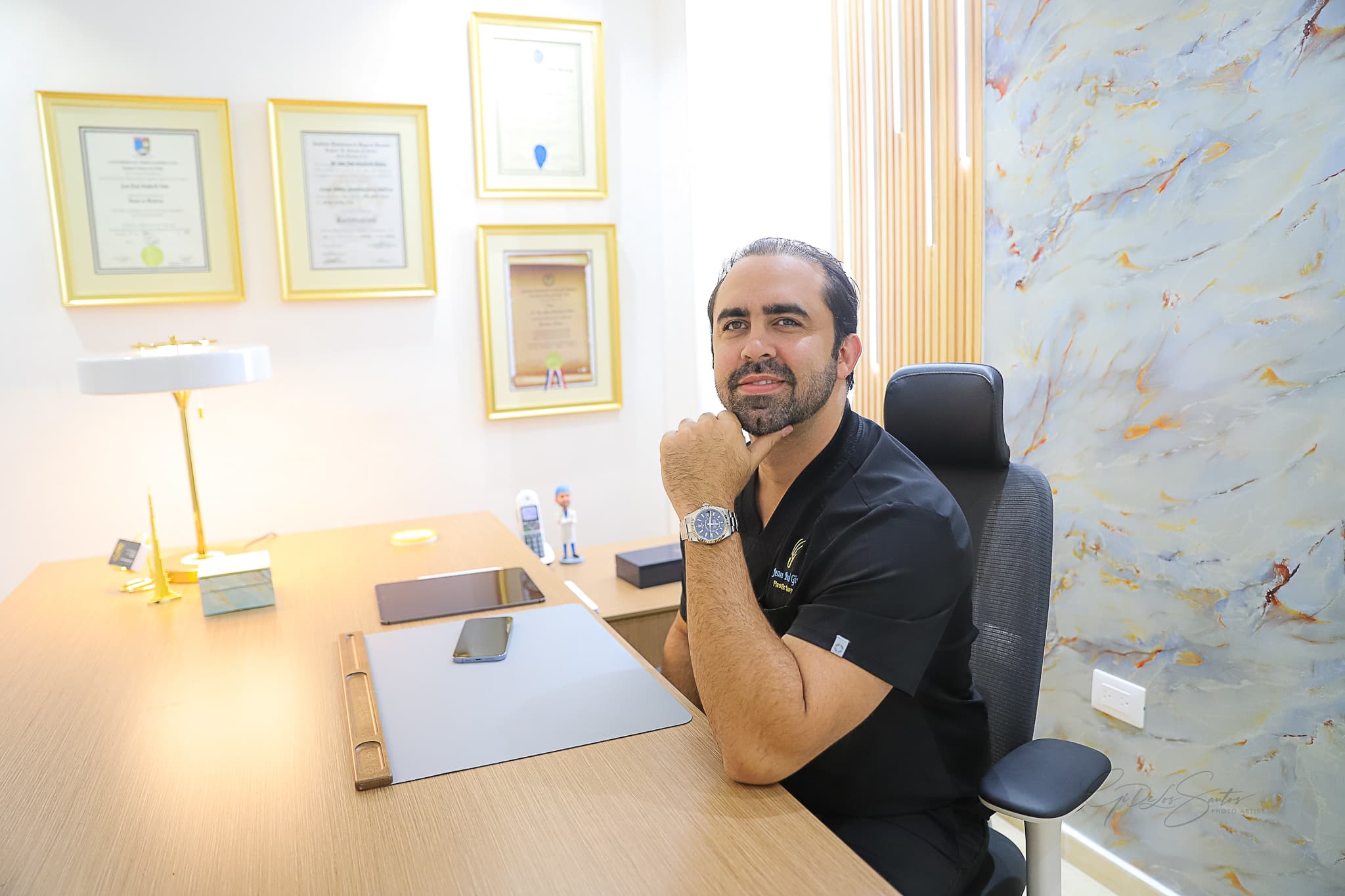
Most articles about plastic surgery explain how to get the procedure you want. This one explains why you might not get it.
Dr. Jean Paul Giudicelli Saba turns patients away regularly. Sometimes permanently, more often temporarily. Patients are rarely told this in advance, so when it happens it feels personal. It is not.
The surgeon who says yes to everything
A surgeon who agrees to every request is not being generous. They are either not evaluating properly or they have decided the booking matters more than the outcome.
Every patient turned away is money declined. That is the point. A surgeon willing to lose the booking is a surgeon whose yes actually means something.
Reasons that are temporary
You smoke
Nicotine constricts blood vessels and cuts oxygen delivery to healing tissue. In a tummy tuck or breast lift, where blood supply to the skin flap is already compromised by the surgery itself, this can cause tissue death. The consequences range from delayed healing to a wound that will not close.
Stop for four to six weeks before surgery and stay off it during recovery. This includes vaping, pouches, and patches. Patients who quit before surgery and resume at week two lose most of the benefit.
Your weight is still moving
A tummy tuck removes a fixed amount of skin. Lose thirty pounds afterward and you have loose skin again. Gain thirty and you stretch what was tightened.
The requirement is a weight you have held for three to six months, not a number on a chart. This has become common with GLP-1 medications, where patients are still losing weight when they book.
Your health needs attention first
Uncontrolled diabetes, unmanaged hypertension, thyroid problems, clotting disorders, and untreated sleep apnea all raise surgical risk. Most are manageable. Get them managed, then come back.
You are planning a pregnancy
Pregnancy stretches abdominal skin and separates the muscles a tummy tuck repairs. Having the surgery first means repeating it later.
Some patients have surgery knowing they may have more children, and that is a legitimate choice as long as it is an informed one. It is worth knowing before, not after.
You are nutritionally depleted
Healing requires protein. Patients on aggressive weight loss protocols, particularly GLP-1 medications that suppress appetite, sometimes arrive with intake too low to support recovery. Bloodwork shows this. It is correctable in a few weeks.
Reasons that are harder
What you want is not achievable with your anatomy
A BBL needs donor fat. A very lean patient may not have enough for a meaningful result. Breast implants beyond what your tissue can support lead to thinning, rippling, and eventual revision. Skin with poor elasticity will not retract smoothly over aggressive liposuction.
Usually there is a version of the goal that works. Sometimes there is not.
Your expectations do not match what surgery does
Patients occasionally arrive with a photo of a different body and want that body. Surgery changes proportion within your frame. It does not replace your frame.
When someone cannot describe what they want in terms of their own anatomy, the outcome is unlikely to satisfy them regardless of how well the operation goes.
The combination you want is too much
Risk climbs sharply as surgical time extends. Most surgeons treat six hours as the ceiling for elective combined procedures.
Wanting a tummy tuck, BBL, breast lift, and arm lift together does not mean it can be done in one session. Staging is usually the answer, not refusal.
Something in the conversation does not add up
This is the hardest to explain because it is a judgment call rather than a rule. A patient in crisis, someone whose motivation is another person's opinion, someone who has had four revisions and is still searching for a result that does not exist. These cases do not end well and an experienced surgeon learns to recognize them.
What to do when the answer is no
Ask whether it is permanent or conditional. Most refusals come with a path: quit smoking, stabilize your weight, treat the condition, wait until after your family is complete.
Ask what would change the answer. If the surgeon cannot tell you, that is worth noting.
Consider a second opinion. Two board certified surgeons may reasonably assess the same case differently. What should concern you is a second opinion that dismisses a safety issue the first surgeon raised. If one says stop smoking and the other says it does not matter, the second is not being flexible.
Take the timeline seriously. Waiting six months to stabilize your weight is not lost time. It is what makes the result last.
Why this matters more when traveling
An international patient who is turned down after arriving in Santo Domingo has already paid for flights and accommodation. That pressure is exactly why a thorough virtual consultation matters before anything is booked.
The evaluation happens first. Bloodwork, medical history, photographs, and an honest conversation about what your anatomy allows. Nobody should buy a plane ticket without knowing whether the surgery is going to happen.
About Dr. Giudicelli
Board certified plastic surgeon in Santo Domingo, Dominican Republic. Member of ASPS, SODOCIPRE, and FILACP. Residency at Hospital Salvador B. Gautier through the RENACIP program. All procedures performed in accredited surgical facilities with certified anesthesiologists. 4.8 stars on Google across 66 verified patient reviews.
Common questions
Can I be refused after arriving in Santo Domingo?
It is possible if pre-operative bloodwork reveals something unexpected or if your health has changed since the consultation. Thorough evaluation beforehand makes it unlikely.
Will another surgeon just say yes?
Probably. That is not a good reason to go to them. Consider why one surgeon declined and another did not.
How long do I need to stop smoking?
Four to six weeks before surgery, and through recovery. Some surgeons test nicotine levels before operating.
What if my weight will not stabilize?
Work with your physician on why. If you are on a GLP-1 medication and still losing, wait until your weight plateaus. That plateau is coming.
Does being turned down mean I can never have surgery?
Rarely. Most reasons are conditions to resolve rather than permanent disqualifications.
Getting an honest evaluation
If you want to know whether you are a candidate, and what would need to change if you are not, the virtual consultation is free and carries no obligation.
Contact us via WhatsApp or visit drgiudicelli.com.