The compression garment after surgery is one of the most important tools in your recovery, and also one of the most misunderstood. Patients often wear it wrong, take it off too soon, or size it incorrectly.
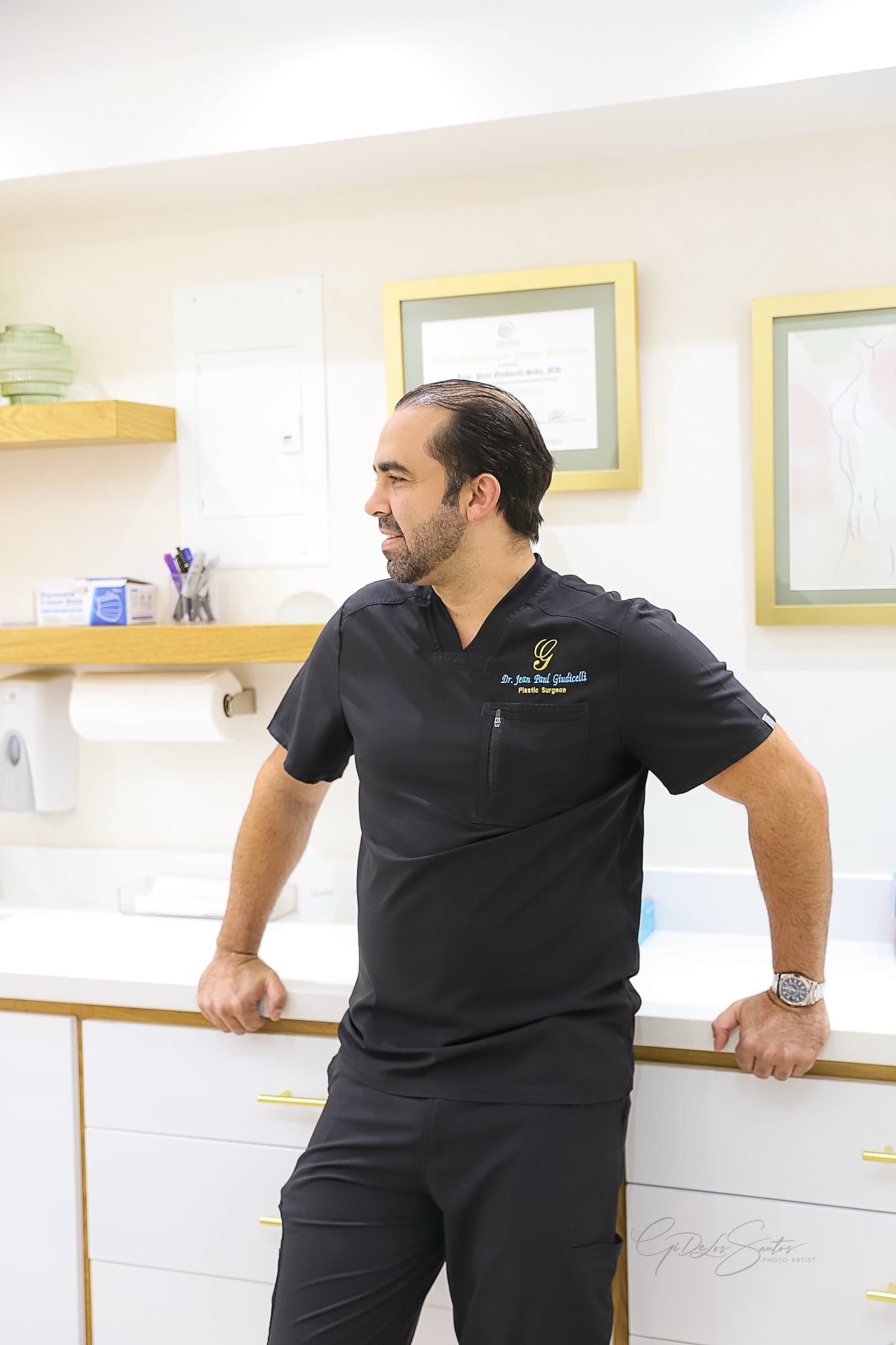
Dr. Jean Paul Giudicelli Saba, board certified plastic surgeon in Santo Domingo, walks through what the compression garment does, how the stages work, and where patients go wrong.
What does a compression garment do after surgery?
A compression garment after surgery applies steady, even pressure to the treated area to reduce swelling, support healing tissue, and help the skin settle against its new contour. It is standard care after liposuction, Lipo 360, tummy tuck, BBL, and most body contouring procedures.
The pressure limits fluid buildup in the spaces created during surgery. It also holds the tissue in place while your body forms the connections that determine your final shape. This is not optional comfort wear; it is part of the surgical result.
Why is compression so important?
Compression matters because surgery, particularly liposuction, leaves open space under the skin where fluid collects. Left unmanaged, that fluid can pool into a seroma, a collection that sometimes needs to be drained.
The garment presses the skin back down toward the muscle so those spaces close in an even, controlled way. Patients who skip compression tend to swell more, stay lumpy longer, and are more likely to develop irregularities in the skin. Consistent wear gives your contour the best chance to set smoothly.
What are the stages of compression garments?
Compression after surgery is usually divided into two stages, each with a different garment. The stage-one garment is worn during the early swelling phase, and the stage-two garment takes over once swelling begins to come down.
- Stage one: A softer, more forgiving garment worn in the first weeks, when swelling is highest and the tissue is most tender. It often opens easily for bathroom use and dressing changes.
- Stage two: A firmer garment introduced once early swelling subsides, typically around week two to four. It provides tighter shaping as your body approaches its final contour.
Some patients use foam boards, abdominal binders, or lipo foam under the garment to even out pressure and prevent creasing. Dr. Giudicelli will tell you which combination fits your procedure.
How long do you wear a compression garment?
Most patients wear a compression garment after surgery for about three months, though the exact timeline depends on the procedure and how you heal. The first weeks are close to full-time wear, and the requirement eases gradually after that.
A typical pattern is roughly 24 hours a day for the first two to four weeks, removing it only to shower and wash the garment. After that, many patients move to daytime wear for several more weeks. Larger procedures such as a tummy tuck or combined surgery often call for longer wear than a single-area liposuction.
Do you sleep in the compression garment?
Yes, in the early weeks you sleep in the compression garment. Swelling does not pause overnight, so continuous pressure through the first two to four weeks is where the garment does much of its work.
Sleeping in it feels awkward at first, and most patients adjust within a few nights. Follow the sleeping position your procedure requires, and keep the garment smooth and untwisted before you settle in for the night.
How tight should a compression garment be?
A compression garment should feel firm and supportive, but never painful. It should hug the treated area evenly without cutting into your skin, restricting your breathing, or leaving deep grooves that stay long after you take it off.
Too loose and it does nothing. Too tight and it can fold the skin, restrict circulation, and create indentations that are difficult to correct later. If the garment causes numbness, tingling, color changes in the skin, or pain that builds rather than eases, loosen it and contact your team.
What are the most common compression garment mistakes?
The most common mistake is taking the garment off too early because it feels uncomfortable or the swelling seems to have gone down. Swelling that looks resolved on the surface is often still present underneath, and stopping compression early is a frequent reason contours turn out uneven.
- Buying the wrong size: A garment sized too small folds and digs in; one too large gives no real compression.
- Uneven pressure: Skipping foam or boards over hollow areas can leave ridges where the fabric bunches.
- Wearing it wrinkled: A garment twisted or rolled at the edges can press permanent lines into healing skin.
- Not owning a second garment: Without a spare, patients skip wear on laundry day, which breaks the continuity that matters most early on.
- Ignoring hygiene: A dirty garment against fresh incisions raises the risk of skin irritation and infection.
These are avoidable errors, and they are among the reasons some patients are disappointed with an otherwise well-performed surgery. For more on this theme, see the biggest mistakes patients make after plastic surgery.
How do compression and lymphatic massage work together?
Compression and lymphatic massage work together to move surgical fluid out of the tissue and keep swelling down. The massage helps drain fluid toward the body's lymphatic channels, and the garment then holds the tissue in place so it does not refill.
Many patients begin gentle lymphatic massage in the first weeks as directed by their surgeon, and wear the garment in between sessions. You can read more in the article on lymphatic massage after plastic surgery.
How do you care for your compression garment?
Care for your compression garment by washing it regularly and letting it keep its shape and elasticity. A clean garment against healing skin lowers the risk of irritation, and worn-out fabric loses the pressure that makes it useful.
Hand wash or use a gentle cycle with mild soap, and air dry rather than using high heat, which breaks down elastic fibers. Having two garments makes this practical, so one can be worn while the other dries. Replace a garment that has stretched out and no longer feels firm.
When should you contact your surgical team?
Contact your surgical team if the garment causes pain that increases rather than eases, or if you notice signs that go beyond normal recovery. The garment should support you, not create new problems.
Reach out for numbness or tingling that does not resolve when you loosen it, skin color changes, open or weeping incisions, a growing pocket of fluid, spreading redness, or fever. Every patient heals differently, and your team would rather hear from you early than late.
Frequently Asked Questions
Can I take the compression garment off to shower?
Yes. You can remove the compression garment to shower once your surgeon clears you to do so, usually within the first days. Put it back on promptly afterward, and keep the garment clean and dry to protect your incisions.
What happens if I stop wearing it too early?
Stopping too early can lead to increased swelling, fluid collection, and uneven or lumpy contours that are difficult to correct later. The tissue needs continuous support while it settles, so wear the garment for the full period your surgeon recommends.
Is more compression better?
No. A garment that is too tight can restrict circulation, fold the skin, and create permanent indentations. Compression should feel firm and even, never painful, and never so tight that it causes numbness or color changes.
Will the garment give me my final shape?
The garment supports and protects your result, but it does not create your shape on its own. Your final contour comes from the surgery itself and how your body heals, with the garment helping the tissue settle smoothly over several weeks.
Planning your procedure
The compression garment after surgery is a small part of the overall plan, but wearing it correctly makes a real difference in your result. During your consultation, Dr. Giudicelli will explain the garments your specific procedure requires and how to use them.
Schedule your free virtual consultation today. Contact us via WhatsApp or visit drgiudicelli.com.