Most of breast augmentation recovery is uneventful. What catches patients off guard is the timeline: how long the tightness lasts, when the implants start to look natural, and how much of the early appearance is temporary.
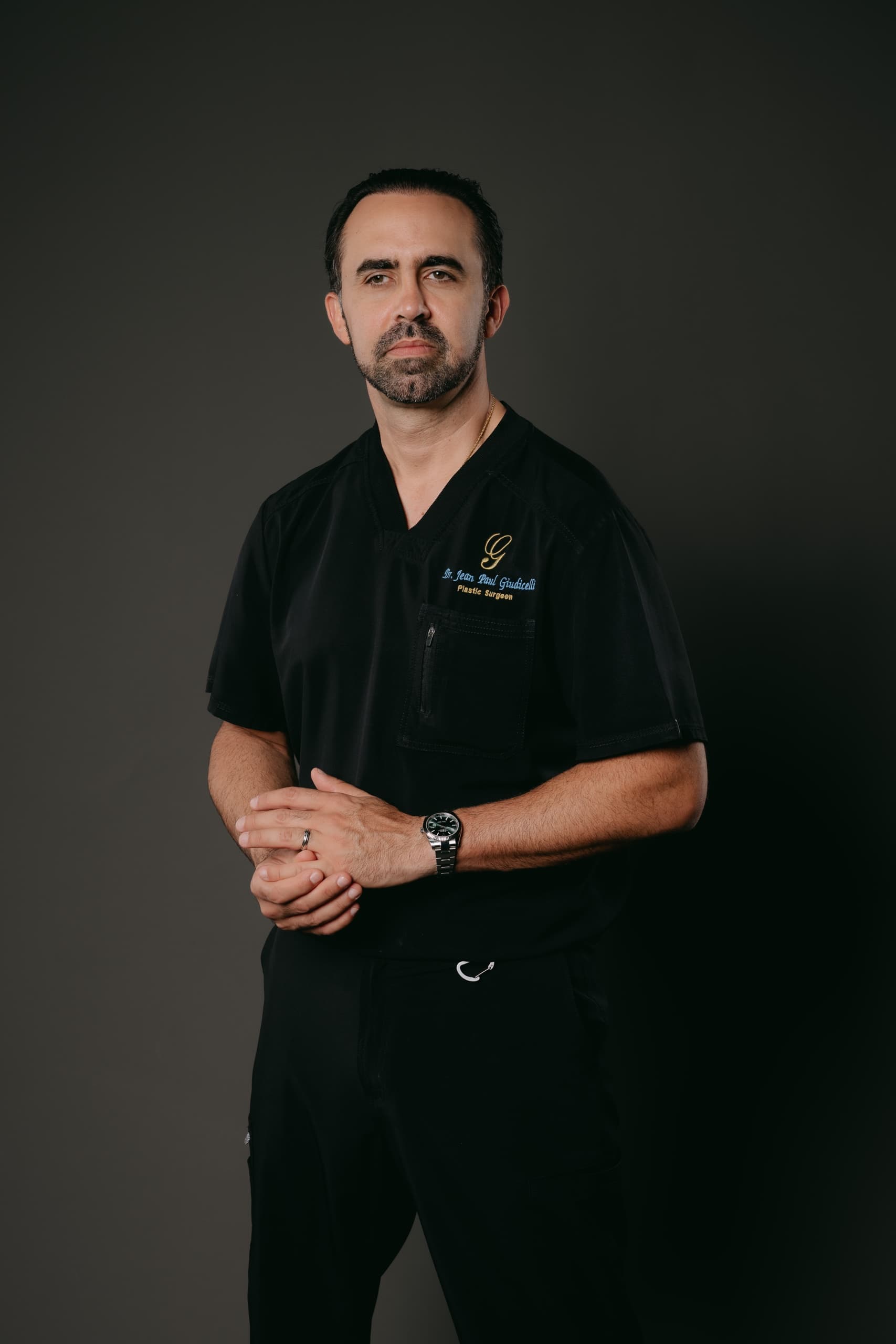
Dr. Jean Paul Giudicelli Saba, board certified plastic surgeon in Santo Domingo, walks through what to expect week by week.
What does breast augmentation recovery involve?
Breast augmentation recovery is the gradual process by which swelling settles, the implants drop into position, and sensation normalizes. A breast augmentation is one of the gentler body procedures to recover from compared with a tummy tuck or liposuction, but it still asks for patience over months, not days.
The early weeks are about protecting the healing pocket around each implant. The later months are about waiting for the final shape to reveal itself. Both matter, and rushing the first stage affects the second.
The first 48 hours
The first two days after breast augmentation are the most uncomfortable of the entire recovery. You wake in a surgical support garment with a feeling of pressure and tightness across the chest, often described as heaviness rather than sharp pain. This is normal and expected.
Take your pain medication as instructed by your surgeon rather than waiting for discomfort to build. Keep your upper body elevated on pillows when resting. Short, slow walks around your accommodation begin the same day to reduce the risk of blood clots.
Week 1 — the tight phase
During the first week, the chest feels tight, the implants sit high and firm, and the breasts may look fuller and rounder than your final result. This high, tight appearance is temporary and alarms patients who do not expect it. The implants have not yet settled into the lower part of the pocket.
You can usually manage light self-care, but you should not lift anything heavy, reach overhead, or push and pull with your arms. Most patients sleep on their back, elevated, for this entire period. Showering is typically allowed within the first days as directed by your surgeon.
Week 2 — starting to ease
By the second week, the sharpest tightness begins to ease and daily movement becomes easier. Many patients feel well enough to handle gentle, non-strenuous activity and light desk-type work. The breasts still sit high, and swelling remains significant.
This is the window in which international patients are often completing their stay in Santo Domingo. Plan to remain in the Dominican Republic for at least 13 days after surgery, arriving two to three days before your procedure, so your early follow-up and any suture checks happen before you travel home. If you are unsure about timing, read our guide on flying after plastic surgery.
Weeks 3 to 4 — the implants begin to drop
Between weeks three and four, the implants start to descend into a more natural position and the upper fullness softens. This process is often called "drop and fluff," and it happens gradually rather than overnight. One side may settle slightly faster than the other, which is common and usually evens out.
Most patients return to a normal daily routine during this period. You can typically resume light lower-body exercise such as walking, while continuing to avoid chest-focused activity, heavy lifting, and anything that bounces or strains the breasts.
Weeks 6 to 8 — returning to activity
By six to eight weeks, most patients are cleared for fuller activity, including more demanding exercise, provided healing is on track. Your surgeon will confirm when you can return to chest exercises, running, and lifting, because this depends on your procedure and your individual healing.
The breasts look considerably more natural than in the early weeks, though they are not yet in their final form. Residual swelling and some firmness are still present and continue to improve.
Months 3 and beyond — settling into shape
From around three months, the breasts feel softer, sit lower and more naturally, and move more like your own tissue. Plan to wear your support garment or surgical bra for 3 months, as instructed by your surgeon, to support the implants while the pocket heals and the tissue adapts.
The final result of breast augmentation becomes visible at 8–12 months, once all swelling has resolved and the implants have fully settled. Judging your outcome before this point is premature, because what you see in the early months still changes.
What about changes in sensation?
Changes in nipple and breast sensation are common after breast augmentation and are usually temporary. Some areas may feel numb, overly sensitive, or tingly in the first weeks and months as the nerves recover. For most patients, sensation gradually normalizes over several months.
In uncommon cases, some altered sensation can persist longer or be permanent. Dr. Giudicelli will discuss this with you, because it is an individual part of recovery that cannot be fully predicted in advance.
How should you sleep during recovery?
Sleep on your back with your upper body elevated for the first several weeks after breast augmentation. This position reduces swelling and keeps pressure off the healing implants. Side and stomach sleeping put uneven pressure on the breasts and are typically avoided until your surgeon clears you, often around six weeks or later.
Using a few pillows or a wedge makes back sleeping more comfortable. Many patients find this the hardest habit to maintain, but it genuinely protects the result.
What helps recovery go smoothly?
- Wear your garment as instructed — consistent support during the first 3 months helps the implants settle correctly
- Avoid nicotine — smoking and vaping impair blood supply and healing; stop before surgery and stay off it during recovery
- Do not rush the gym — chest exercise too early can disrupt the healing pocket
- Stay ahead of discomfort — take medication on schedule rather than waiting for pain
- Keep your follow-up contact — remote support by WhatsApp means questions can be answered after you travel home
When should you contact your surgical team?
Contact your team or seek medical attention if you notice warning signs rather than waiting to see if they pass. Each patient is different, and prompt evaluation matters more than avoiding a false alarm.
- Pain that increases rather than gradually decreases
- Fever, or spreading redness and warmth over the breast
- Sudden swelling, firmness, or size change on one side only
- Chest pain, shortness of breath, or calf pain and swelling
- Fluid or drainage from an incision
Frequently Asked Questions
How long does breast augmentation recovery take?
Most patients return to a normal daily routine within two to four weeks and to full activity, including exercise, by six to eight weeks when cleared by their surgeon. The breasts continue to settle, and the final result is visible at 8–12 months.
Why do my implants sit so high at first?
Implants sit high and firm in the first weeks because they have not yet dropped into the lower part of the healing pocket. This is normal and temporary. Over the following weeks the implants gradually descend and soften into a more natural position.
When can I sleep on my side or stomach?
Back sleeping with your upper body elevated is recommended for the first several weeks. Side and stomach sleeping are typically allowed once your surgeon clears you, often around six weeks or later, depending on your individual healing.
How long do I wear the surgical bra?
Plan to wear your support garment or surgical bra for 3 months, as instructed by your surgeon. Consistent support during this period helps the implants settle correctly while the pocket heals.
Do I need a lift as well as implants?
That depends on the position of your breasts and nipples before surgery, not on recovery. If you are weighing the two, our article on breast augmentation vs. breast lift explains how the decision is made during consultation.
Planning your procedure
The virtual consultation covers your candidacy, your implant options, and a realistic picture of what your own recovery will look like week by week.
Schedule your free virtual consultation today. Contact us via WhatsApp or visit drgiudicelli.com.