A mini tummy tuck sounds like a smaller, easier version of the same operation. It is not simply a smaller tummy tuck — it treats a different problem, in a different patient, with different limits.
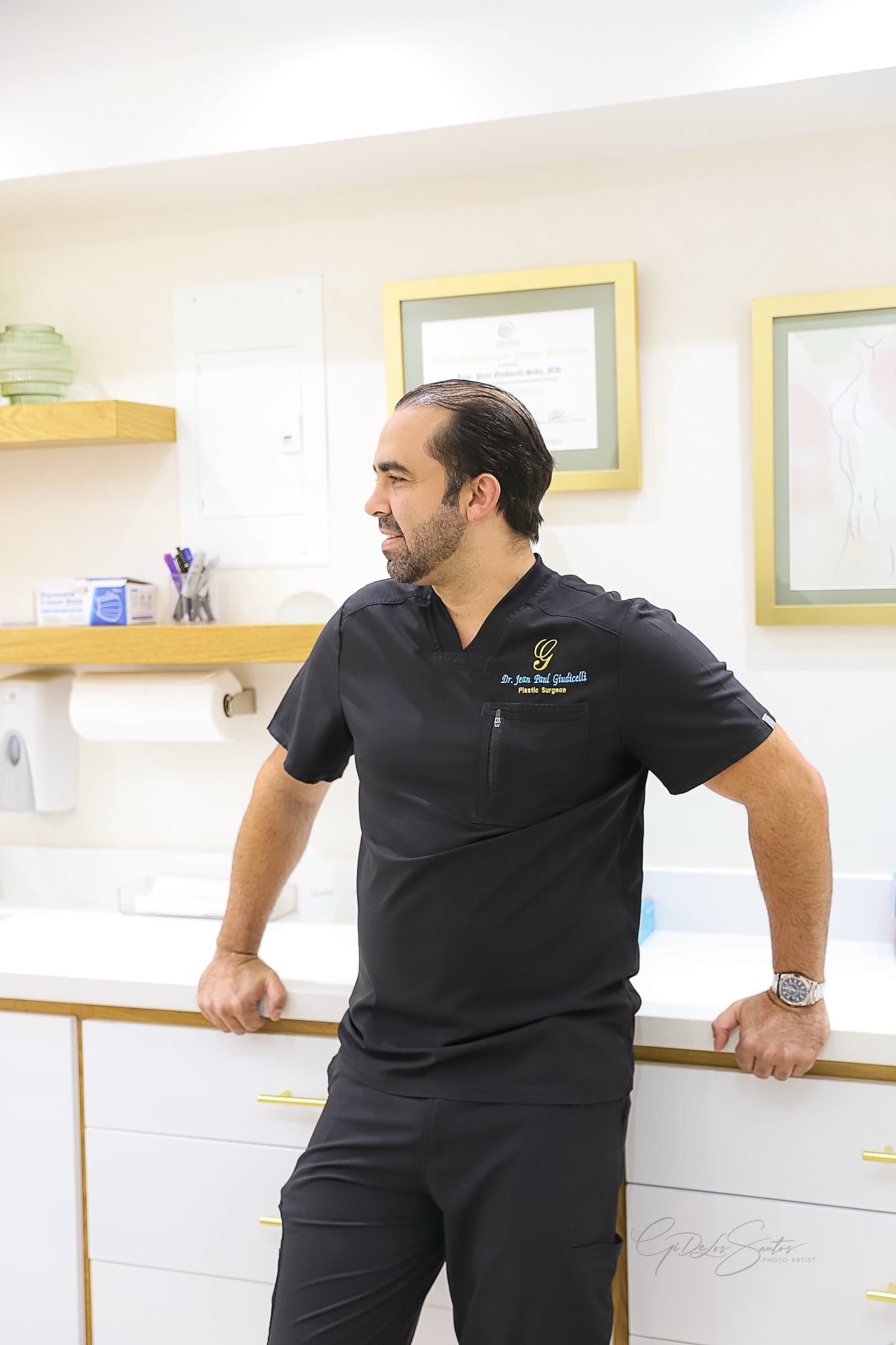
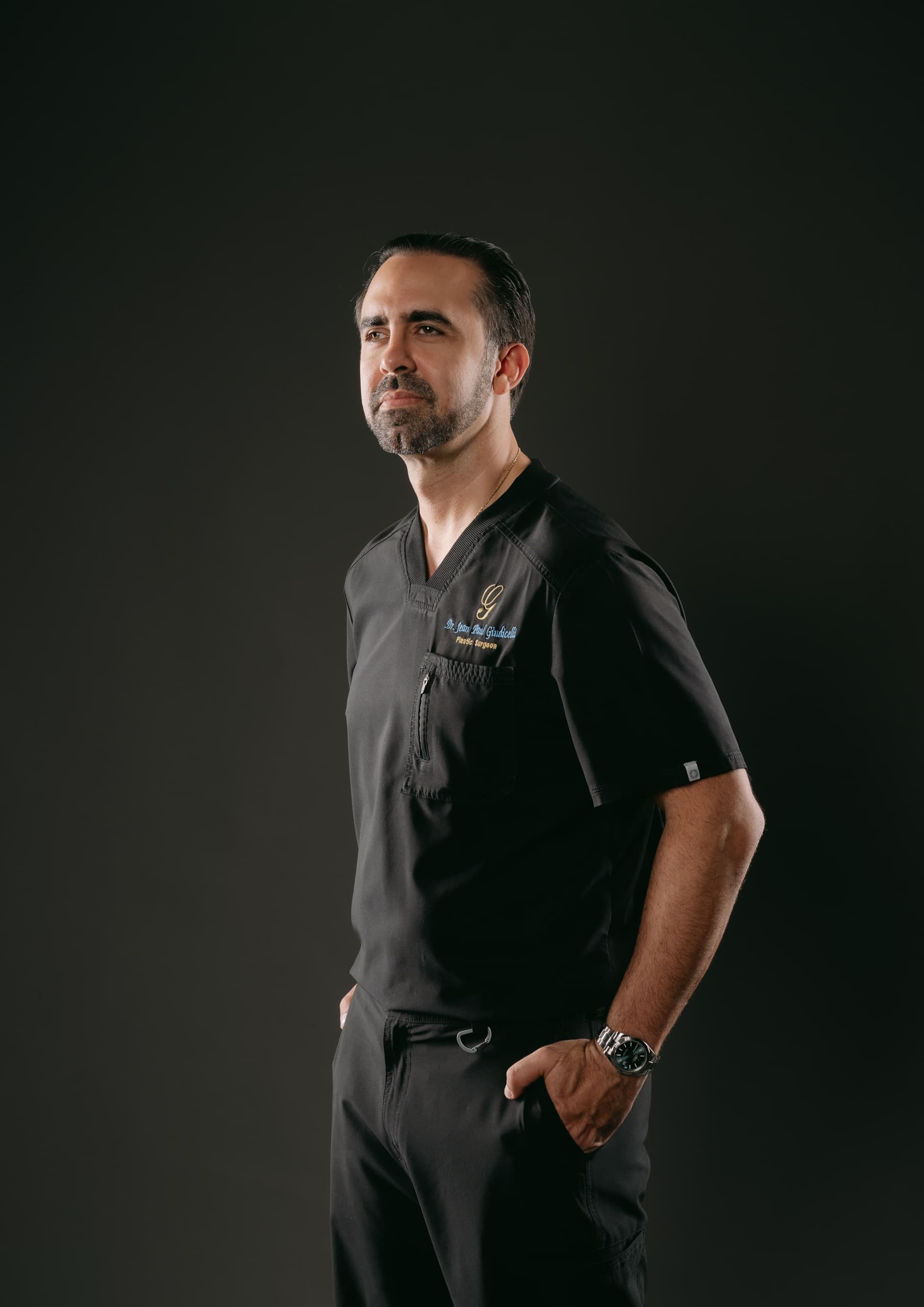
Dr. Jean Paul Giudicelli Saba, board certified plastic surgeon in Santo Domingo, explains what separates a mini from a full tummy tuck and who each one is actually for.
What is a mini tummy tuck?
A mini tummy tuck is a limited abdominoplasty that addresses only the area below the belly button. It removes a smaller amount of loose lower-abdominal skin through a shorter incision and, when needed, tightens the muscle below the navel. It does not touch the upper abdomen and does not reposition the belly button.
Because it treats a smaller zone, the mini tummy tuck is a narrower operation with a narrower set of candidates. Many patients who ask for one turn out to need a full tummy tuck to get the result they are picturing.
What is a full tummy tuck?
A full tummy tuck is a complete abdominoplasty that addresses the entire abdomen, above and below the belly button. It removes excess skin from hip to hip, tightens the abdominal muscles along their full length, and repositions the navel through a small second incision.
The full tummy tuck is the right choice for most patients with significant loose skin, muscle separation reaching above the navel, or changes left by pregnancy or major weight loss. It does more, and it corrects more.
What is the main difference between them?
The main difference is how much of the abdomen each procedure treats. A mini tummy tuck works only below the belly button, with a shorter scar and no navel incision. A full tummy tuck works on the whole abdominal wall, with a longer scar and a small scar around the navel.
A second key difference is the muscle repair. A mini tummy tuck can tighten only the lower muscles, while a full tummy tuck repairs muscle separation along the entire midline. If your abdominal muscles have separated above the navel — common after pregnancy — a mini cannot reach that area.
Who is a good candidate for a mini tummy tuck?
A good candidate for a mini tummy tuck has a small amount of loose skin limited to the lower belly, a belly button in a normal position, and little or no muscle separation above the navel. This is often someone close to their goal weight with a specific lower-abdominal bulge that diet and exercise have not resolved.
- Loose skin confined to below the navel
- Minimal or no upper-abdominal muscle laxity
- A stable weight held for several months
- Realistic expectations about a limited correction
Candidacy is individual, and the only way to know is an in-person or virtual evaluation of your skin, your muscle tone, and where your looseness actually sits.
Who is a good candidate for a full tummy tuck?
A good candidate for a full tummy tuck has loose skin across the whole abdomen, muscle separation that extends above the belly button, or both. This describes many patients after one or more pregnancies and many patients after significant weight loss.
If you can lift or fold skin above your navel, if your midline bulges when you sit up, or if your belly button has drifted downward, a mini tummy tuck will likely leave you disappointed. The full procedure exists precisely for these situations.
How do the scars compare?
A mini tummy tuck leaves a shorter horizontal scar low on the abdomen, without a scar around the navel. A full tummy tuck leaves a longer horizontal scar from hip to hip, plus a small circular scar where the belly button is repositioned. Both horizontal scars are placed low, where underwear and swimwear can conceal them.
A shorter scar is not automatically better. A mini tummy tuck placed on the wrong patient can pull the result downward or leave the upper abdomen untouched, which patients notice far more than an extra few inches of well-placed scar. If you want a deeper look at how these scars heal, see our guide on tummy tuck scars and how to make them fade.
How does recovery differ?
Recovery from a mini tummy tuck is generally somewhat shorter than from a full tummy tuck, because less tissue is moved and the muscle repair is more limited. Even so, both are real surgeries with real downtime, and the differences are smaller than most patients expect.
For both procedures, you wear a compression garment for 3 months to support healing and reduce swelling. Final results become visible at 8–12 months, once swelling has fully resolved and the tissues have settled. Early weeks involve limited activity, no straining, and walking slightly bent forward after a full tummy tuck.
Can a mini tummy tuck be combined with liposuction?
Yes, a mini tummy tuck is often combined with liposuction of the flanks or upper abdomen to improve overall contour. Liposuction removes fat but does not tighten loose skin or repair muscle, so the two procedures address different problems and can complement each other.
Combining procedures lengthens surgical time and recovery, and not every combination is safe in a single session. Your surgeon evaluates your health, your anatomy, and the total operative time before recommending a plan.
How do you know which one you need?
You know which one you need after an honest evaluation of three things: where your loose skin sits, whether your muscles have separated above the navel, and where your belly button is positioned. These findings, not a preference for a smaller scar, determine the right procedure.
Many patients arrive convinced they want a mini and learn a full tummy tuck will serve them better — and occasionally the reverse. Choosing the smaller operation when you need the larger one is one of the more common reasons patients seek revision later. If you are weighing skin removal against fat removal more broadly, our article on tummy tuck vs. liposuction may help.
Frequently Asked Questions
Is a mini tummy tuck less painful than a full tummy tuck?
A mini tummy tuck often involves somewhat less discomfort than a full tummy tuck, because less tissue is moved and the muscle repair is smaller. Both procedures cause real soreness in the first days, managed with medication as instructed by your surgeon. Pain is individual and cannot be predicted precisely.
Will a mini tummy tuck fix muscle separation from pregnancy?
A mini tummy tuck can tighten only the muscles below the belly button. Pregnancy commonly separates the muscles above the navel as well, and in those cases a full tummy tuck is needed to repair the entire midline. An evaluation determines how far your separation extends.
Can a mini tummy tuck remove upper belly skin?
No. A mini tummy tuck treats only the area below the belly button. If you have loose skin above the navel, it will remain after a mini procedure, which is why a full tummy tuck is recommended for whole-abdomen looseness.
How long do I need to stay in the Dominican Republic afterward?
Plan to stay at least 13 days after surgery, arriving 2–3 days before your procedure. This window allows for post-operative checks, early recovery, and clearance before flying home for both the mini and the full tummy tuck.
Planning your procedure
The right operation depends on your anatomy, not on which one sounds smaller. A virtual consultation lets Dr. Giudicelli assess your skin, your muscles, and your goals, and recommend the mini or full tummy tuck that fits your body.
Schedule your free virtual consultation today. Contact us via WhatsApp or visit drgiudicelli.com.